13 of the most Notorious Gangsters in American History
November 21, 2025
The Best of Epik Fails of History? (Blog Articles List)
March 23, 2026
From the Ancient Past to the trenches of World Wars, from secret gadgets to keyboards, spies have played an essential part in human history. While their methods of deception have changed over the years, these covert operatives are just as relevant today as they were 500 years ago. Here’s 7 key tales of espionage throughout history, from the Elizabethan Golden Age to the Cold War and beyond…

The International Spy Museum – Washington DC
1 – Sir Francis Walsingham: On Her Majesty’s Secret Service (England – The Golden Age)
Sir Francis Walsingham was Queen Elizabeth’s Principal Secretary of State, and is considered by historians to be “The First Spymaster”. During his time in the service of the Queen, he established an extensive, European-wide intelligence network that was centuries ahead of its time.

As a young Protestant student, Francis was forced to flee England under the reign of Queen Mary the First (aka “Bloody Mary”) in 1553 – who, like so many monarchs back then, was firmly Catholic. Young Francis escaped to Switzerland and Italy where he was inspired by Renaissance thinkers, and soon became an ideological warrior for the Protestant cause. In 1558, Queen Elizabeth the First (the daughter of Henry the 8th and Anne Boleyn) ascended to the throne, immediately reinstating the protestant Church of England, and Walsingham returned home.
 The Catholic Church saw Elizabeth as an existential threat and soon began plotting to depose her. As part of the Queen’s court, Francis Walsingham became instrumental in uncovering the conspiracies against Elizabeth. In 1571, he helped to thwart a convoluted plot to overthrow the Queen and replace Elizabeth with her cousin, Mary, Queen of Scots. Then, in 1572, as an Ambassador to France, Walsingham was a firsthand witness to the St. Bartholomew’s Day Massacre, where thousands of Protestant French Huguenots were slaughtered by an angry Catholic mob, which further radicalized him. Upon his return to England in 1573, he was appointed as Elizabeth’s ‘principal secretary’, which later became known as Secretary of State.
From his position, Francis Walsingham became the Queen’s Watchman – fiercely loyal and paranoid, willing to do anything to ensure her safety. The two had a somewhat contentious relationship at times, she once got so frustrated with him that she famously threw her slipper at him! But she also understood that he often told her the truths she didn’t want to hear, and she ultimately trusted his instincts.

Geoffrey Rush as Sir Francis Walsingham and Cate Blanchett as Queen Elizabeth in “Elizabeth” (1998)
In the Queen’s service, Sir Francis Walsingham single-handedly created the first intelligence agency, utilizing an extensive network of contacts across Europe, with spies strategically placed across 12 French towns, 9 German cities, 4 Italian states, and Constantinople. He even had double-agents embedded in the Vatican! Walsingham’s agency also revolutionized cryptography, and created a “Black Chamber” system to intercept and copy foreign mail in transit through London.
In 1586, Walsingham’s spies uncovered a plot by Mary, Queen of Scots (who was being held captive in the Tower of London) to assassinate Elizabeth, with the help of Anthony Babington. And in 1588, it was Walsingham’s network that gave Queen Elizabeth an early warning of the coming Spanish Armada, which proved crucial in mounting an effective defense against the unprecedented attack!

Till the end, Sir Francis Walsingham lived by the moto: ‘Video et Taceo’ – “I see and keep silent”, a silent observer who worked in the shadows, and passed along critical information in whispers. His dedication ensured the legacy of the Elizabethan Golden Age, proving that knowledge, gathered quietly and analyzed coldly, is the ultimate weapon.
More Early Spy History:

- In Ancient China, during the 5th Century BCE, Sun Tzu’s “The Art of War” devoted a whole chapter to “The Use of Spies”, categorizing espionage into five categories: local, internal, double, disinformation, and surviving.
- Roman Emperor Hadrian (117-138 CE) employed a ‘secret police’ known as “The Frumentarii”, who served as the Emperor’s “eyes and ears”.
- According to legend, in 878 CE, King Alfred the Great disguised himself as a wandering minstrel to infiltrate the Viking camp under Guthrum, in order to map out their defenses, prior to the Battle of Edington.
- During the Crusades, between the 11th and 13th Centuries, in Syria and Persia, the Nizari Ismaili sect known as “The Assassins” (Hashshashin) imbedded deep-cover agents as guards and servants, sometimes for years!
- In 17th Century England, John Thurloe followed in Sir Francis Walsingham’s footsteps as Oliver Cromwell’s spymaster by establishing a “Black Chamber” system in the post office creating a blueprint for modern signals intelligence. Thurloe famously dismantled a secret society of Royalists called “The Sealed Knot” who had been plotting to restore the monarchy of King Charles II.
2 – Robert Townsend and Washington’s “Secret Six” (The American Revolution)
In 1778, during the American Revolution, General George Washington formed a spy network, with the help of Major Benjamin Tallmadge, known as the Culper Ring, and their primary operative: Robert Townsend.

As seen in the hit series, “TURN – Washington’s Spies”
Operating under the code-name “John Bolton”, Major Tallmadge directed the highly sophisticated network, and reported directly to Washington, referred to as “711”. What made their endeavors so successful was the use of invisible ink, which meant their letters looked like ordinary mail. The core operatives have since come to be known as Washington’s “Secret Six”, thanks to the 2013 book by Brian Kilmeade and Don Yaeger.

The “Secret Six” included:
- Robert Townsend
- Abraham Woodhull
- Austin Roe
- Caleb Brewster
- James Rivington
- And Anna Strong*
Robert Townsend, a quaker merchant, operated as a spy under the alias “Samuel Culper Jr.”, while working as a reporter for a Loyalist newspaper, where he was able to eavesdrop on British officers. Townsend was recruited in 1778, by Abraham Woodhull, who operated under the name “Samuel Culper Sr.”. Woodhull often traveled and collected intelligence under the guise of visiting his sister in British-occupied New York. Together, Townsend and Woodhull worked with James Rivington, their man on the inside who posed as a staunch supporter of King George. Rivington ran the newspaper that Townsend wrote for and the New York coffee shop where they conducted their operation.
Austin Roe was a tavern keeper who served as a courier between the small hamlet of Setauket, on Long Island, and New York City (a grueling 110-mile round trip by horse back), frequently picking up secret messages, and dropping them off at Townsend’s shop. Caleb Brewster was a blacksmith who served as a boatman, utilizing a fleet of whaling boats to ferry intel across British-patrolled waters to Fairfield, Connecticut where General Washington was stationed. And finally a mysterious woman known simply as “Agent 355” – who many believe was Anna Strong, who signaled to the couriers from her home in Long Island, using a clothesline and handkerchiefs.
 With the aid of the Culper Spy Ring, Robert Townsend and his patriot cohorts successfully picked up details on British troop movements, attack plans, and supply routes. Their intel exposed a British plot involving counterfeit currency, helped the Continental Army avoid an ambush in Rhode Island, and even uncovered Benedict Arnold’s treason! All the while, George Washington himself never knew the identities of the spies who saved his life, the one’s diligently working behind the scenes to ensure victory for the revolution, with little to no acknowledgement.
What’s even more astounding is that Robert Townsend’s identity was so secret that it wasn’t discovered until 1930!

Other Notable Revolutionary Spies:
- Nathan Hale was an American schoolteacher who volunteered to spy on British troops in New York. He was quickly apprehended and executed for treason, but not before his famous last words: : “I only regret that I have but one life to lose for my country.”
- Hercules Mulligan was an Irish tailor in New York City who gained intel from his high-society British clientele. He’s credited with saving Washington’s life at least twice!
- James Armistead Lafayette an enslaved African American man who acted as a double-agent for the Marquis de Lafayette who managed to successfully infiltrate Lord Cornwallis’s camp, and provided critical intel that helped the Continental Army win the Battle of Yorktown!

- Following the French Revolution, a smuggler named Karl Schulmeister was recruited by Napoleon Bonaparte to infiltrate the Austrian Army. Schulmeister tricked the Austrians into believing the French were in retreat, leading to their surrender without a fight. Napoleon once said, “The spy is worth a corps of 40,000 men.”
3 – Allan Pinkerton’s Detective Agency (The Union – Civil War)
Allan Pinkerton was a Scottish-American who became Chicago’s first Police Detective in 1849, and with the help of attorney Edward Rucker, formed the Pinkerton Detective Agency, whose motto was “We never sleep.” The Pinkertons gained national recognition as they helped solve a slew of train robberies throughout the 1850’s before becoming instrumental in saving Abraham Lincoln’s life from a Confederate plot, during the Civil War…

Pinkerton and some random tall guy in a hat.
Allan Pinkerton himself was a life-long abolitionist who harbored escaped slaves on ‘the underground railroad’, and was even friends of both John Brown and Frederick Douglass, so he was naturally a supporter of Lincoln and jumped at the opportunity to work with his administration.
In 1861, Pinkerton’s agents uncovered evidence of a plot to assassinate the newly elected President, so he hired Kate Warne, the agencies first female detective, to go undercover and infiltrate a group of Confederates convening in Baltimore, Maryland, disguised as a wealthy lady with a thick southern accent. She uncovered a conspiracy to ambush and assassinate the President-elect on his way to his inauguration in Washington DC, while passing through Baltimore.

In response to this alarming news, Pinkerton and a team of hand-picked agents, including Warne, served as Lincoln’s private security detail (years before there was a Secret Service detail) and hatched a plan to smuggle the President through the city at night, by train. At one point, they even disguised Lincoln as an old woman in a shawl! (For more on The Baltimore Plot of 1861, check out Brad Meltzer’s “The Lincoln Conspiracy”, or that one episode of “Drunk History”)
Following the thwarting of the Baltimore Plot, Allan Pinkerton was appointed as Chief of Intelligence for the Union Army and reported directly to General George B. McClellan. Pinkerton organized a network of spies and scouts, deep behind enemy lines. During the Civil War, Pinkerton himself went undercover as a Confederate soldier under the name “Major E.J. Allen”, and once had his identity exposed in Memphis, Tennessee, and barely escaped with his life!
The Pinkerton Detective Agency wasn’t just the forerunner to the Secret Service, it was the basis for the US Army’s Counterintelligence Command, and the FBI!
Other Notable Civil War Spies:
- Maria Isabella ‘Belle’ Boyd – an infamous Confederate Spy who would seduce Union officers for intel.
- Pauline Cushman – one of the most successful spies in the Union.
- Harriet Tubman – who, in addition to being a slave-turned-anti-slavery-activist, as well as leader of the Underground Railroad, and early supporter of woman’s suffrage, was also a spy and scout for the Union Army during the Civil War!

4 – Mata Hari, ‘The Dancing Spy’ (Germany / France – World War I)
One of the most notable names in the history of espionage is of course Mata Hari, but even to this day there is debate among historians as to whether or not she was in fact a spy, or just an unfortunate scapegoat…

Born in the Netherlands in 1876, Margaretha Geertruida Zelle had a somewhat turbulent upbringing experiencing both wealth and poverty. In need of financial stability, she answered an ad, and married Rudolf MacLeod, a Dutch colonial army captain, at 18 years old, and in 1897, moved to Malang in the Dutch East Indies, where they lived on the island of Java. Unfortunately, Margaretha’s husband turned out to be abusive, and she eventually managed to leave him and retained custody of their daughter, Jeanne MacLeod, but despite court orders, her ex never paid child support. While in Java, Zelle first took on the name ‘Mata Hari’ which in Indonesia means ‘the sun’ or ‘eye of the day’.
In 1903, Mata Hari moved to Paris where she initially performed as for a circus as a horse rider under the name ‘Lady MacLeod’, and as a free-spirited bohemian, quickly gamed fame and notoriety as both a model for French artists and an exotic dancer, performing until 1915, at which point she transitioned to a successful career as a courtesan for a number of wealthy and powerful individuals across Europe.
 When World War One broke out in 1914, the Netherlands remained neutral, which conveniently allowed Mata Hari to cross borders freely, which (coupled with her celebrity persona) made her a perfect candidate as a spy. In 1915, she was approached by a German consul offering her 20,000 francs to gather intelligence, assigning her the codename: H-21. She later claimed that she took the money as “reimbursement” for all the furs and jewelry that they’d confiscated from her, and only ever gave the Germans “outdated gossip”.
 Then in 1916, while attempting to see her wounded lover (Captain Vadim Maslov, a Russian Staff Captain of the 1st Special Infantry Regiment), she was approached by French Intelligence. Mata Hari was unknowingly recruited as a Double-Agent for France in exchange for one million francs! She took the assignment, hoping that she’d be able to marry and retire off of the sum.
As fate would have it, the French intercepted coded messages regarding Agent H-21, she was accused of passing information that led to the deaths of 50,000 Allied soldiers. During the trial she famously exclaimed, “A courtesan, I admit it. A spy, never!” Despite no concrete evidence against her, she was found guilty and sentenced to death.
On October 15th, 1917, Margaretha Zelle was executed by a firing squad of 12 French soldiers, at the age of 41. She refused a blindfold and defiantly blew a kiss to the soldiers before they took her life. While she later became synonymous with the “femme fatale” archetype from pulp crime novels and the ‘Film Noir’ genre, through a modern lens, her story has since been reframed as one of desperation and tragedy, as a victim of circumstance.
Other Notable WWI Spies:
- Fritz Joubert Duquesne – another WWI German Spy who may have been responsible for the sinking of the HMS Hampshire in 1916, which killed Lord Kitchener, Britain’s Secretary of State for War.
- Marthe Cnockaert – a volunteer nurse for the German Army in Belgium who led a double-life, gaining the trust of German officers. She managed to memorize troop movements, mapped out munitions depots, and even helped destroy a secret German tunnel! What’s even crazier is that she earned both the German Iron Cross for her medical work AND was awarded the British Legion of Honour!

- La Dame Blanche (The White Lady) – a professional corporation of Belgian spies which included hundreds of women in their ranks, named after a German legend that foretold the downfall of a dynasty. The British Military later estimated that 70% of their intelligence came from them.
5 – Christopher Lee – The Real 007? (UK – WWII)
The late, great, Sir Christopher Lee is widely known around the world as an acclaimed British actor for his numerous iconic roles in several blockbuster hits across multiple decades, including but not limited to: The Lord of the Rings, Star Wars, Dracula, and James Bond – but what you may not realize is that before becoming a celebrity, he was a real life British super spy!

Christopher Lee was born in London, in 1922. His father was a WWI veteran and his mother was an Italian Countess who modeled for a number of famous Edwardian artists, and his lineage can even be traced back to Charlemagne, the First Holy Roman Emperor. He spent a part of his childhood in Switzerland after his parents separated, and when they returned to England he attended a private school where he took an interest in acting and became proficient at fencing. Christopher’s mother eventually married Ian Fleming’s uncle, making the two step cousins. As a kid he once randomly met Rasputin’s assassins: Prince Yusupov and Grand Duke Dmitri Pavlovich, and as a teenager he spent some time abroad in France and once met famed war correspondent Webb Miller who once followed Pancho Villa’s expedition and won a Pulitzer Prize for his covering of the last guillotine execution.
In 1939, at the age of 17, Christopher Lee enlisted in the military right as World War II broke out with Hitler’s invasion of Poland. For his first assignment, Lee volunteered with the Finish Army during the Winter War against the Soviet Union, but never saw any action later commenting that he knew how to shoot, but not how to ski. After briefly working as an office clerk, he then enlisted in the Royal Air Force in 1941. During flight training in South Africa, he was diagnosed with an optic nerve issue and grounded from being a pilot, so he decided to go into RAF Intelligence.

As a spy for the British government, Christopher Lee was proficient in at least six languages fluently, including German, French, Italian, and Spanish, with an intimate knowledge of Russian, Swedish, and Greek – making him an incredibly useful asset as a Liaison Officer in interrogations and signal work. During the war, Lee was attached to elite Special Forces units, working alongside the SAS and SOE, where he dealt with top-secret intel, analyzed maps, helped plan bombing raids, and briefed pilots. Lee worked behind enemy lines in North Africa where he’s said to have sabotaged German Luftwaffe planes and airfields from Libya to Egypt. In 1943, he was stationed in Italy, and was involved in the Battle of Monte Cassino. During that time he had several close calls, including: a plane crash, malaria, and once climbed Mount Vesuvius just three days before it erupted!
 Towards the end of the war, in 1945, Christopher Lee was given a new assignment: to hunt down Nazi war criminals. He was tasked by CROWCASS (The Central Registry of War Criminals and Security Suspects) to track down a number of SS officers: “We were given dossiers of what they’d done and told to find them, interrogate them as much as we could and hand them over to the appropriate authority.” Lee spent months traveling the ruins of Europe in his quest, visiting concentration camps to gather evidence for the Nuremberg Trials, and using his extensive language skills to interrogate Nazis. He rarely spoke of his time in the service, and was often rather cryptic, but often spoke of “dreadful, dreadful things” that would haunt him for the rest of his life.
After leaving the RAF in 1946, Lee turned back to his life-long passion of acting, which as a welcome respite from the horrors of war. He was soon cast in Terrance Young’s “Corridor of Mirrors” (1948), and Laurence Olivier’s “Hamlet” (1948), before appearing as a Spanish Captain in “Captain Horatio Hornblower” (1951), after the director asked if he could sword fight and speak Spanish – all of which kicked off an unprecedented run as an actor.
Christopher Lee starred in at least 266 films throughout his incredible career, including such iconic roles as: Count Dracula in the Hammer horror films series (starting in 1958, alongside Peter Cushing), the villainous Count Dooku in the Star Wars prequels, several Tim Burton roles, Sherlock Holmes, and of course as Saruman the White in the Lord of the Rings trilogy. In fact, in one notable story, while filming a scene for LOTR, Lee gave director Peter Jackson some notes on how people typically react to getting stabbed in the back!

Many consider Christopher Lee to be one of Ian Flemming’s primary inspirations for James Bond in his 007 novels starting with 1953’s “Casino Royale” – the book series that later inspired the movie franchise that kicked off with 1962’s “Dr. No” starring Sean Connery! Ian Flemming himself worked with British Intelligence during the war as part of the OSS (The Office of Strategic Services). But what’s even stranger is that Christopher Lee himself (ironically) starred alongside Roger Moore in 1974’s “The Man with the Golden Gun” as one of the most famous Bond villains, in arguably one of the worst Bond movies! Despite the film not being great, Lee’s performance in it is superb as a classy hitman with a tropical lair, complete with a flying car, and special custom gold pistol.

In addition to being an accomplished actor and Nazi hunter, Christopher Lee was formally knighted in 2009 by Prince Charles of Whales (currently King Charles the Third), and in 2010 released his first heavy metal album: “Charlemagne: By the Sword and the Cross” at 88 years old! Lee passed away in 2015 at the impressive age of 93, leaving behind an incredible and unprecedented legacy.

For more on 007, listen to Season 3 of Podcasters Assemble where we covered all 25 Bond movies!
WWII Honorable Mentions:
- Dušan Popov – a Serbian MI6 Agent in British Naval Intelligence during WWII, was another possible inspiration for Bond. He loved fast cars, expensive hotels, and beautiful women, living every day like it was his last. He once famously tried to warn the FBI about a potential attack on Pearl Harbor months before it happened, based on intel he’d uncovered, but J. Edgar Hoover didn’t trust him as a source because of “his playboy lifestyle”.

- Roald Dahl, the author of “Charlie and the Chocolate Factory”, “Matilda”, and “James and the Giant Peach” also played a key role in the OSS, alongside Ian Fleming.
- In 1940, Winston Churchill tasked the Special Operations Executive (SOE) with infiltrating Nazi-occupied France during the war. The SOE recruited a number of women for the task, to go undercover behind enemy lines, because they could move through the territory as couriers and wireless operators with less suspicion. The organization employed more than 13,000 people, including 3,200 women – many of whom were deployed to Axis-occupied countries. In 1996, a memorial on the wall of Westminster Abbey was dedicated to honor 91 male and 13 female SOE Agents who lost their lives in France, fighting for the Allied cause.

- Lise de Baissac (code-name: “Odile”) parachuted into occupied France in 1942. She posed as a poor widow, living in an apartment near the Gestapo headquarters in Poitiers. Later, after a brief return to England, in 1944, she parachuted into Normandy right before D-Day where she bicycled hundreds of miles between resistance camps in order to coordinate sabotage efforts in order to delay German reinforcements.
- Cecile Pearl Witherington (code-name: “Pauline”) was considered one of the most effective leaders in the SOE and “the best shot” in the service. She took command of 3,500 resistance fighters, and executed over 800 railway disruptions across France in the lead up to D-Day. She was recommended for the Military Cross, but wasn’t awarded the medal, because she was a woman.
- Odette Sansom (code-name: “Lise”), another SOE agent in France, was arrested by the Gestapo in 1943 and promptly subjected to brutal and inhuman torture, but refused to identify her fellow agents or radio operators. She was held in a concentration camp until the end of the war, and later awarded the George Cross.
- Andrée Borrel (code-name: “Denise”) was the first female combat agent to parachute into France in 1942, and became the second-in-command over the Paris circuit of the French Resistance. Unfortunately, she was arrested in 1943, endured torture with a “disdainful silence”, and was executed in 1944.
 Eddie Chapman (code-name: “Agent Zigzag”) was a British career criminal and safecracker who was in prison during the Nazi invasion of the Channel Islands in 1940. He offered to spy for Germany to gain his freedom, but immediately surrendered to MI5 and became a double-agent. MI5 even helped him fake the sabotage of an Allied aircraft factory using pyrotechnics, which earned him the Iron Cross – from Germany!
- Juan Pujol García (code-name: “Garbo”) was a Spanish chicken farmer who was recruited by the British as a double-agent. Juan fed disinformation to the Nazis throughout the war, and even convinced the Nazis that the D-Day Invasion was targeting Pas-de-Calais instead of Normandy!
- Nancy Wake (code-name: “The White Mouse”) was a New Zealand-born nurse, journalist, and wife of a French industrialist who became a lethal guerrilla leader who once killed a SS sentry with her bare hands to stop him from sounding an alarm!
- In 1940, British mathematician, Alan Turing, helped crack the Nazi’s Enigma code with the help of a large Polish electromechanical device called the “Bomba” cipher (an early mechanical computer), which lead to allied victories during the Battle of the Atlantic! He is now considered the father of the modern computer.

- Noor Inayat Khan (Code Name: “Madeleine”) was an Indian Princess of royal descent. Prior to WWII, she was a children’s book author and pacifist. During the war, she became the first female wireless operator sent into occupied France. At one point she was the only link between London and the French Resistance in Paris when the rest of the network was exposed. She was tragically betrayed, captured, tortured, and executed, but never revealed a single secret to the enemy. Her final word was “Liberté!”
- The Women of the Dutch Resistance: Truus Oversteegen, Freddie Oversteegen, and Hannie Schaft – a trio who fought back against German occupation, seducing and killing an unknown number of Nazi officers.

- One of the most successful spies in WWII was actually a Russian agent, Richard Sorge – a communist who posed as a Nazi journalist in Tokyo, Japan. He provided Stalin with the date of “Operation Barbossa” – the planned German invasion of Russia, as well as surmising that Japan was not planning to attack the USSR. Unfortunately, he was captured and executed in 1944.
6 – Aldrich Ames – A Soviet Double Agent in the CIA?! (US / USSR – The Cold War)
One of the most infamous spies of the 20th Century was actually a traitor to the United States during the height of the Cold War…

Immediately following the end of WWII in 1945, a nuclear-powered standoff began between the United States and the Soviet Union. The Cold War was a global conflict of brutal proxy wars, weaponized propaganda, and of course espionage. Spies became the primary tool in the struggle between the Capitalist Western Forces and the spread of Communism. As a result, President Truman established the CIA (The Central Intelligence Agency) in 1947. While the FBI would focus on the mainland, the CIA’s mission was abroad.
Meanwhile, in Soviet Russia, there was the KGB. Although Russia has had a history of spy networks, including Stalin’s secret police, the NKVD, and the “Red Orchestra”, the KGB was officially founded under Nikita Khrushchev in 1954 as “the Sword and Shield of the Communist Party” which was in operation until the fall of the USSR in 1991. During that time, the KGB became the world’s largest intelligence service and effectively infiltrated every major Western agency, and one of their most effective assets was an American double-agent.
Aldrich Ames was born in Wisconsin, in 1941. In 1952 his father got a job working at CIA headquarters in Langley, Virginia. Then in 1957, at the age of 16, Aldrich was given the opportunity to intern at the CIA. After two years of college at the University of Chicago, he dropped out, and in the 1960’s returned to the CIA as a low-level employee which (despite his best efforts) eventually turned into a full-blown career. He married a fellow agent, and was stationed overseas in Ankara, Turkey. Despite successfully infiltrating and recruiting Soviet intelligence officers, his superiors wrote that he was “unsuited for field work and it is recommended he spend the remainder of his career at CIA headquarters.” As a result, Ames became disgruntled and considered resigning from the agency.

Throughout the 1970’s, Aldrich’s performance reviews noted his excessive alcoholism and he once accidentally left a briefcase full of classified documents on a New York subway. Then in 1981 he was stationed in Mexico City, while his wife, Nancy, stayed back in New York. While in Mexico, Ames had three affairs and eventually hooked up with María del Rosario Casas Dupuy a Columbian scholar and CIA informant. In 1983, he was put in charge of Soviet counterintelligence, and decided to leave Nancy and marry Rosario, which led to a costly divorce.
In addition to paying for court fees, losing over half his assets, and paying monthly support for his ex-wife, his new wife also had a spending problem, between frequent shopping sprees, and international calls to her family – Ames now found himself around $46,000 in debt, and on the verge of bankruptcy! His solution? Treason…

In 1985, Aldrich Ames walked into the Soviet Embassy in Washington DC and decided to play a “con game” with the Russians, offering up information that was “essentially valueless” in exchange for $50,000. The KGB paid the tab and he was put on their radar as a CIA insider. Ames however realized he’d crossed a line that there was no coming back from. Soon enough, he’d helped the Soviets identify more than 10 top-level field agents, using “dead drops”, signaling KGB operatives with chalk marked mailboxes.
Over the next several years, as Ames leaked more and more classified intel to the enemy, CIA leadership started to notice that their agents were disappearing at an alarming rate. Initially the blamed it on technical bugs or bad luck, not wanting to consider that they had a mole within their ranks. During his work as a double-agent, Ames compromised over 100 covert operations, which pointed to a catastrophic security leak. As a result, an investigation was opened, code-named “Nightmover” as a joint CIA-FBI task-force began to narrow down suspects. The investigation soon closed in on Ames due to his suddenly extravagant lifestyle when they realized that he owned a Jaguar sports car AND a $500,000 house on a $60,000 government salary!

“I won’t tell anyone I’m a Russian double-agent, but there will be signs…”
Bank records showed that every time Aldrich met with his “authorized” Russian contacts, a large cash deposit miraculously appeared in his bank account. This was further reinforced by evidence of a shredded note from his trash that indicated instructions or a ‘dead drop’ meeting spot. Aldrich Ames as apprehended on February 21st, 1994, just as he was attempting to leave the country on a “business trip” to Moscow. When the FBI raided his luxurious home, they found six Rolex watches, and noted that his wife owned dozens of expensive designer dresses (most of which hadn’t been worn), 165 unopened boxes of pantyhose, and over 500 pairs of shoes!
Eventually, Ames was charged under the Espionage Act, and pleaded guilty in order to avoid the death penalty, and sentenced to life in prison without the possibility of parole. When all was said and done, he’d sold out the names of nearly every CIA asset in the USSR for over $4.6 million, had compromised more classified intel than any other spy in history, and his betrayal directly led to the execution of at least 10 Western assets, including Adolf Tolkachev, a Russian citizen working with the CIA, and General Dmitri Polyakov, a vital US asset for 20 years.

I would have gotten away with it too – if it wasn’t for my insatiable greed!
Aldrich Ames has since become a case study in M.I.C.E. (Money, Ideology, Compromise, and Ego) – a clear example of how a single disgruntled spy can do far more damage than an entire platoon of heavily armed enemy soldiers.
Other Notable Cold War Spies:
- “The Cambridge Five” were British spies recruited by the Soviets in the 1930’s at Cambridge University: Kim Philby, Guy Burgess, Donald MacLean, Anthony Blunt, and John Cairncross – each of whom rose through the ranks of the British Intelligence during WWII and beyond, suppling the Russians with thousands of documents, and managed to remain unknown until 1951! Blunt was a renowned art historian and even an advisor to the Queen, while Philby had become the head of British Counter-Intelligence, tasked with catching Soviet spies!
- Julius and Ethel Rosenberg – who (along with theoretical physicist, Klaus Fuchs) helped to steal the Atomic secrets of the Manhattan Project for the USSR. On July 16th, 1945, the US detonated the first atomic bomb at the Trinity Test Site, and just 4 years later, on August 29th, 1949, the Soviet Union tested its own. In 1950, Klaus Fuchs was arrested for espionage, which then led authorities to Ethel and her husband Julius, along with their co-conspirators. In 1953, the Rosenbergs became the only American civilians to ever be executed for espionage.

- During the early days of the Cold War, the CIA and KGB both developed a number of spy gadgets including microfilm, hollow coins, invisible ink pens, shoe transmitters, pipe radios, coat-button cameras, and even lipstick guns!?
- In 1960, Oleg Penkovsky, a Soviet Colonel, turned over crucial intel regarding the USSR’s nuclear capabilities to the CIA and MI6. It’s believed that he may have helped to avert a nuclear war in doing so. He was executed for treason in 1963.
- Gary Powers – a U-2 spy plane pilot for the CIA who was hit by a surface-to-air missile while on a recon mission over the USSR, and captured behind enemy lines, in 1960.
 Major Rudolf Anderson Jr. – another U-2 pilot who was shot down, in 1962, over Cuba, during the Cuban Missile Crisis.
- In 1962, after a series of failed attempts to assassinate Fidel Castro (including but not limited to the use of an exploding cigar planted by the Chicago mafia – true story), the CIA under director Allen Dulles proposed “Operation Northwoods” in which a staged ‘false flag’ terrorist attack against American civilians would be used as justification for going to war with Cuba! The plan was immediately rejected by President John F. Kennedy who had fired Dulles after the Bay of Pigs fiasco, and threatened to dismantle the CIA. One year later, on November 22nd, 1963, JFK was assassinated under mysterious circumstances, and Allen Dulles (the former CIA director) was put in charge of the initial investigation. There are still thousands of documents pertaining to the case that are still classified to this day.

- In 1972, a former CIA officer, E. Howard Hunt, and FBI agent, G. Gordon Liddy took part in an illegal wire-tapping operation at the Watergate Hotel against President Nixon’s political opponents – leading to one of the biggest scandals in US history and Nixon’s resignation in 1974, after investigative journalists, Woodward and Bernstein broke the story at The Washington Post.
- In 1975, the Congressional Church Committee exposed the CIA’s illegal human experimentation program, code-name: “MK-Ultra”, which first started in 1953, where unsuspecting citizens were unknowingly subjected to “mind control” experiments involving… LSD!?
- In 1978, on Waterloo Bridge in London, an anti-communist Bulgarian dissident Georgi Markov was stabbed in the leg by a poison-tipped umbrella (likely laced with ricin) and died 4 days later. A similar assassination attempt was made against Vladimir Kostov in Paris, but he luckily survived and recovered. The KGB was likely behind both attacks.
- MI6 developed a suitcase transceiver that came in handy in 1978 when Iranian demonstrators attacked the UK embassy in Tehran and cut the power.
- In 1979, six American diplomats were snuck out of the US Embassy in Iran during the Islamic Iranian Revolution by the Canadian government and the CIA under the guise of a fake sci-fi movie called “Argo” (In 2012, a movie about the real life events was directed and produced by Ben Affleck, who also starred in the film)
- In 1985, Oleg Gordievsky, a high-ranking officer in the KGB who was secretly working for MI6, whose intelligence had helped to de-escalate a nuclear war, was found out, and narrowly escaped Moscow in the trunk of a car!

- In the 1990’s, the CIA declassified Project Stargate to the public – a top-secret program first established in 1977 at SRI (The Stanford Research Institute) where psychics were recruited and utilized for top-secret “Remote Viewing” experiments and operations, in partnership with the Monroe Institute for Paranormal Research. Although there’s still a lot of skepticism about the program (and the subject matter), there are thousands of government documents currently available to the public online. By far the most proficient Remote Viewer was Joseph McMoneagle (Agent 001), a former soldier in the Army who’d been injured in a helicopter accident in Vietnam. McMoneagle successfully helped the CIA track down hostages, locate drug lords, and even once detected a secret Russian nuclear submarine before US satellites confirmed it! McMoneagle earned the Legion of Merit for his services as a psychic spy.
- In the early 1990’s, an investigative journalist, George Knapp, managed to sneak several top-secret Soviet documents out of Russia – the documents prove that the KGB was tracking UFO incidents throughout the Cold War, despite the USSR publicly calling the phenomenon an American hoax!
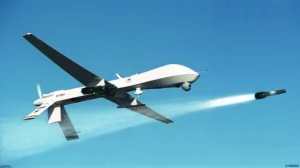
- The CIA developed the first “Predator Drone” (General Atomics MQ-1 / RQ-1) in the 1980’s to spy on foreign adversaries. It was decked out in the latest surveillance technology and was soon modified to deploy AGM-114 Hellfire missiles for the Air Force. It has since become an invaluable asset for espionage and covert air strikes against terrorist cells in the Middle East. It’s successor, the General Atomics MQ-1C “Gray Eagle” can operate at 25,000 feet, for 36 hours, with a range of 200 nautical miles, and can be operated remotely by multiple remote pilots, on the ground, working in shifts.
- Ana Montes was a Cuban analyst for the US Defense Intelligence Agency, secretly working as a Cuban double-agent for 17 years as ‘Agent S’, from 1983 until her arrest in 2001. Her reasons were ideological as she was in opposition to the US’s strict foreign policy at the time. In a 2013 letter from prison she wrote “I believe that the morality of espionage is relative. The activity always betrays someone, and some observers will think that it is justified and others not, in every case.” After serving out her prison sentence she now resides in Puerto Rico.
 In 2001, FBI Agent Robert Hanssen was arrested while attempting to make a “dead drop” to his Russian handlers. He was a counterintelligence expert who (like Aldrich Ames) was a mole for the USSR. He was first approached by Soviet Agents in 1979, motivated purely by greed, and miraculously remained undetected for 22 years, and is considered to be one of the most damaging spies in US history! When he was apprehended he was quoted as saying, “What took you so long?”
7 – Edward Snowden: The Whistleblower (The Digital Age)
Edward Snowden was a former CIA technical advisor turned NSA sub-contractor before becoming the most prominent US government whistleblower to date…

Just as the (first) Cold War was coming to a close with the fall of the Soviet Union in 1991, the world was already rapidly changing as computer technology and the advent of the internet ushered in a new era of digital espionage throughout the 80’s and 90’s. As a result, cyber security and surveillance have quickly become a primary focus on the global stage as nations continue to try and outmaneuver one another through technological innovation, between spy satellites, drone warfare, and weaponized disinformation. The world of spycraft has never been more essential in the 21st Century.

Modern Spycraft – as seen in “Mission Impossible”
Of course, by their very nature, spies are typically anonymous, operating from the shadows, or blending in to the background, so we usually only learn of their exploits years later, or – in the case of modern spies – after they’re exposed. In the case of Edward Snowden, he came forward at the risk of his own life and freedom to expose what he believed was an unethical abuse of power and a severe Constitutional crisis in the wake of the 9-11 terrorist attacks.
As a quick summary: following the tragic events of September 11th, 2001, the United States used the crisis as an excuse to pass ‘The Patriot Act’ – signed into law by President George W. Bush on October 26th, 2001, which was branded as an attempt to fight terrorism, but was used unilaterally as a convenient bypass to circumnavigate the constitutional rights of American citizens, all but nullifying the Fourth Amendment. As bad as all that was though, the public wasn’t aware of just how far reaching the mass-surveillance of Americans had become under this law, until Edward Snowden exposed it in 2014.

Snowden worked in cyber counterintelligence both for the CIA and NSA (The National Security Agency). During his first employment with the CIA, he was stationed in Geneva, Switzerland, in 2007. He later claimed that he once witnessed a CIA agent get a Swiss banker drunk before encouraging him to drive home, and then used the ensuing drunk driving incident against him to leverage the banker as an asset for the agency. In 2009, Snowden worked as a NSA sub-contractor for Dell and was assigned to a facility at Yokota Air Base outside of Tokyo, Japan where he studied Chinese hackers and learned about China’s mass surveillance program. By 2012, Edward Snowden was a lead NSA analyst, working from an underground facility in Hawaii, where his team monitored activity in China and North Korea, with an annual salary of $200,000, where he was given unlimited administrative access to the entire database.

During his work for the CIA and NSA, Snowden became keenly aware of just how far-reaching and potentially unethical the global surveillance programs had become by spying on the whole world. He realized the terrifying Orwellian implications of a dragnet on the entire internet, and how it could be easily weaponized against US citizens, so he felt morally compelled to act. In 2013, Snowden reached a breaking point when he saw James Clapper, the Director of National Intelligence, lying under oath to Congress on live TV, when he was asked directly: “Does the NSA collect any type of data at all on millions, or hundreds of millions of Americans?” and his response was: “No, sir. Not wittingly.” Soon after, he quit his position, and flew to Hong Kong to meet with journalists to expose the truth, but not before he downloaded and copied upwards of 900,000 Department of Defense files, including thousands of highly classified documents!

After fleeing to Hong Kong, Snowden met with journalists Glenn Greenwald, Ewen MacAskill, and Laura Poitras, in secret, to coordinate the release of the information to The Guardian and The Washington Post. Not only did this leak confirm suspicions that the US government was illegally spying on its own citizens, Snowden revealed the sheer scale of the “Five Eyes” global surveillance programs (which includes: the US, the UK, Canada, Australia, and New Zealand), and exposed the “PRISM” program which allowed the NSA and its international partners to access data directly from several major internet companies – including Google, Facebook, Apple, and Microsoft!
In the immediate aftermath of Snowden’s release of high-level intel, the US government charged him under the Espionage Act of 1917 with “unauthorized communication of national defense information” and “willful communication of classified communications intelligence information.” Exiled abroad, Snowden sought political asylum in dozens of countries, but ultimately ended up stranded in Moscow, during a one day layover, when his passport was revoked. He’s since become a Russian citizen as of 2022, and still remains a wanted fugitive in the US, despite becoming a world-renowned celebrity – between his 2014 streamed TED Talk interview from abroad in Russia, “Here’s How We Take Back the Internet”, the 2016 Oliver Stone movie based on his life, “Snowden”, and his 2019 autobiography, “Permanent Record”.

These events also inspired the plot of one of the best Marvel / MCU movies, 2014’s “Captain America: The Winter Soldier” – which involves a plot where Hydra secretly infiltrates SHEILD! The movie features a massive 50’s-era sentient supercomputer built by Zola (a former Nazi scientist working for the US government), and a top-secret algorithm called “Project Insight” which could predict and eliminate potential threats before they arise. All an elaborate allegory for our current national debates around the tug-of-war between security and freedom.
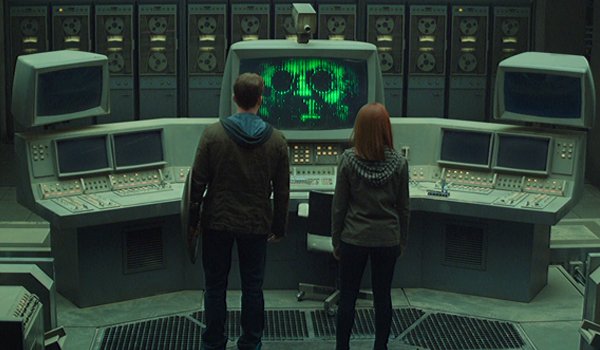
All in all, Edward Snowden remains one of the most polarizing figures of the 21st Century, so it remains to be seen whether or not he’ll go down in history as a hero of the information age, or a traitor to his country…
More Tales of Modern Espionage:
- Vladimir Putin, a former KGB Agent, was elected as Russia’s President in 2000, and has firmly maintained power as either President or Prime Minister in the decades since through altering the country’s constitution, fraudulent elections, and imprisoning his political opponents, including Alexei Navalny (who survived Novichok poisoning in 2020, and later died in a Russian labor camp in 2024). He is accused of numerous political assassinations, manipulating foreign elections, and is responsible for the illegal annexation of Crimea in 2014, along with the military invasion of Ukraine in 2022.

- Katrina Leung, a Chinese-American FBI informant, was revealed to a ‘double agent’ working for the Chinese Ministry of State Security since the 1980’s, and was revealed to be in a romantic relationship with her two primary handlers! She was indicted in 2003.
- In 2006, a former Russian FSB Officer, Alexander Litvinenko, who had defected to the UK, was poisoned in London by a radioactive sample of Polonium-210, which was slipped into his tea by Russian agents, shortly after accusing Putin of ordering the assassination of a Russian journalist.
-

Anna Chapman – Russian Spy
In 2010, Anna Chapman, a media-savvy real estate agent and model in New York was revealed to be 1 of 10 Russian “sleeper agents” imbedded in the US, rooted out by the FBI. Instead of using an alias, she used her social status and celebrity to network with high-level officials. Her and her fellow spies were exchanged during a prisoner swap for 4 western assets in Vienna. The media has since referred to her as “The Real Black Widow”.
- In 2010, Chelsea Manning, an Army intelligence analyst became a high-profile whistleblower when she leaked nearly 750,000 classified documents to WikiLeaks. This unprecedented data dump changed how the world viewed America’s wars in the Middle East (namely Iraq and Afghanistan), but it also put soldiers and undercover agents at risk.
- Jerry Chun Shing Lee is a former CIA officer who was revealed to be a Chinese asset. He was first recruited by Chinese Intelligence in 2010 while living in Hong Kong, and its believed that he was instrumental in dismantling the CIA’s informant network which led to the imprisonment and execution of nearly 20 US agents. He was sentenced in 2019.
- In 2010, US operatives infiltrated the Iranian nuclear program with the first weaponized computer virus: “Stuxnet” which sabotaged Iran’s Natanz uranium enrichment plant from a malware infection deployed by a flash-drive!

- Over the course of several years following the 9-11 attacks, the CIA painstakingly narrowed down the location of the infamous Al-Qaeda terrorist leader, Osama Bin Laden – who was hiding out in a secret compound in Pakistan. CIA operatives (led by Alfreda Frances Bikowsky) tracked a courier and known associate of the terrorist mastermind to the hideout, and after careful analysis deduced that it was their target based on a number of factors. On May 2nd, 2011, President Barack Obama gave the order – a division of SEAL Team Six flew in aboard two stealth helicopters expertly raided the compound in the middle of the night, and executed Bin Laden. The 2012 film “Zero Dark Thirty” includes an extremely accurate depiction of the mission.
- In 2018, former Russian double-agent, Sergei Skripal and his daughter were poisoned in broad daylight, in Salisbury, England – by a military-grade nerve agent! Both thankfully survived the attack, while the incident sparked a massive international crisis. All indications are that the Russian government was behind the attack.
 Mossad, the Israeli Intelligence Services, first established in 1949, has since become one of the most effective spy agencies in the world, with operations targeting former Nazi leaders hiding out in South America to genocidal terrorist cells in the Middle East, as well as helping Jews escape antisemitic regimes around the globe. However, Mossad has come under fire in recent years between the ongoing situation in Palestine and evidence that Jeffrey Epstein (world renowned human trafficker and all around scumbag) may have been a secret asset for the agency in order to obtain blackmail on a number of powerful individuals in the West, from billionaires to world leaders, including both the US and UK. As of 2025 however, this is still very much a developing story…
- From 2016 to 2017, at least 26 American and Canadian personnel stationed in Cuba began having bizarre symptoms now referred to as “Havana Syndrome” or “anomalous health incidents”. A number of other incidents have occurred in the years since, in various places around the world, often targeting either intelligence agents or their families, but there still isn’t a consensus as to the cause. While it’s still a mysterious what or who is behind these occurrences, one theory suggests that it could be the result of a secret energy directed weapon that uses radio waves, high-frequency sonic waves, or even some kind of weaponized microwave weapon. Since then, there have been at least 130 cases reported world wide, including 50 high-ranking CIA personnel….

From decoding cyphers with invisible ink by candlelight to tracking digital signatures from orbit, spies continue to shape history from the shadows with ever more sophisticated tools. Now in the age of AI, Robotics, and Quantum Computing, modern espionage will undoubtedly continue to evolve alongside the rapid advancement of technology in the 21st Century, as those in power continue to try and outmaneuver their adversaries. Perhaps, one day, the art of spycraft will be a relic of the past, but today there’s no denying that, even in this era of transparency, it’s more prevalent than ever before.
Erik Slader

Also be sure to check out:
Pioneers of the Sky: 25 Epic Aviation Milestones!
The (Real) Wild Wild West: 10 Legendary Gunslingers
13 of the most Notorious Gangsters in American History
10 Accidental Inventions and Discoveries (Part 1 of 2)
HACKERS: 15 Infamous Cyber Heists!
NUCLEAR FAILS: 10 of the Most Terrifying Atomic Mistakes in History!
As I’m putting this article together, I’m actually about halfway through writing a spy novel, so hopefully I can get that out in the next year or so, but in the meantime you can help support me by picking up my sci-fi books “2299” and “Tempus Machina” (on Amazon and Audible). If you’re a fan of the Bond movies, check out Season 003 of Podcasters Assemble, as well as my guest appearance on The Great Pop Culture Debate: Best James Bond Film – and my articles regarding my “Daniel Craig / 007 Grief Theory” (on ComicZombie.net) and 10 Bond Movies to watch before “No Time to Die” (from Geek to Geek Media!)